



Gallería Gallería
Archive · 2023–2025

Proof, Built Into the Art

Gallería issued cryptographic certificates of authenticity for physical artwork. An NFC tag on the piece, a tap to verify, a record on a public chain that anyone could check.

Verification service retired · March 2025

THE ARTWORK TAG PUBLIC RECORD BASE · POLYGON · ETHEREUM

Seen In

Before winding down, Gallería ran pilot programs with museums and galleries, including the partners below.

Beka Museum
Rockefeller
Linked By Art
Spotlight
NFT.NYC
Women of Web3
Alchemy
Nouns
A Note from the Founder

TLDR: Gallería will be sunsetting March 2025.

Building Gallería was a crazy, beautiful experience. What started as a simple belief, that an artist's work deserves a legacy as durable as the work itself, became real tags on real artworks, booths, exhibitions, and late nights I'll never forget.

To everyone who was part of it: the artists who trusted us with their work, the galleries and museums that piloted with us, the collectors who scanned, and the friends who showed up every time. Thank you. You made every milestone real.

And to my team, those who stayed up late with me and believed in me: I appreciate you. It would not have been possible without you.

JC

Founder, Gallería

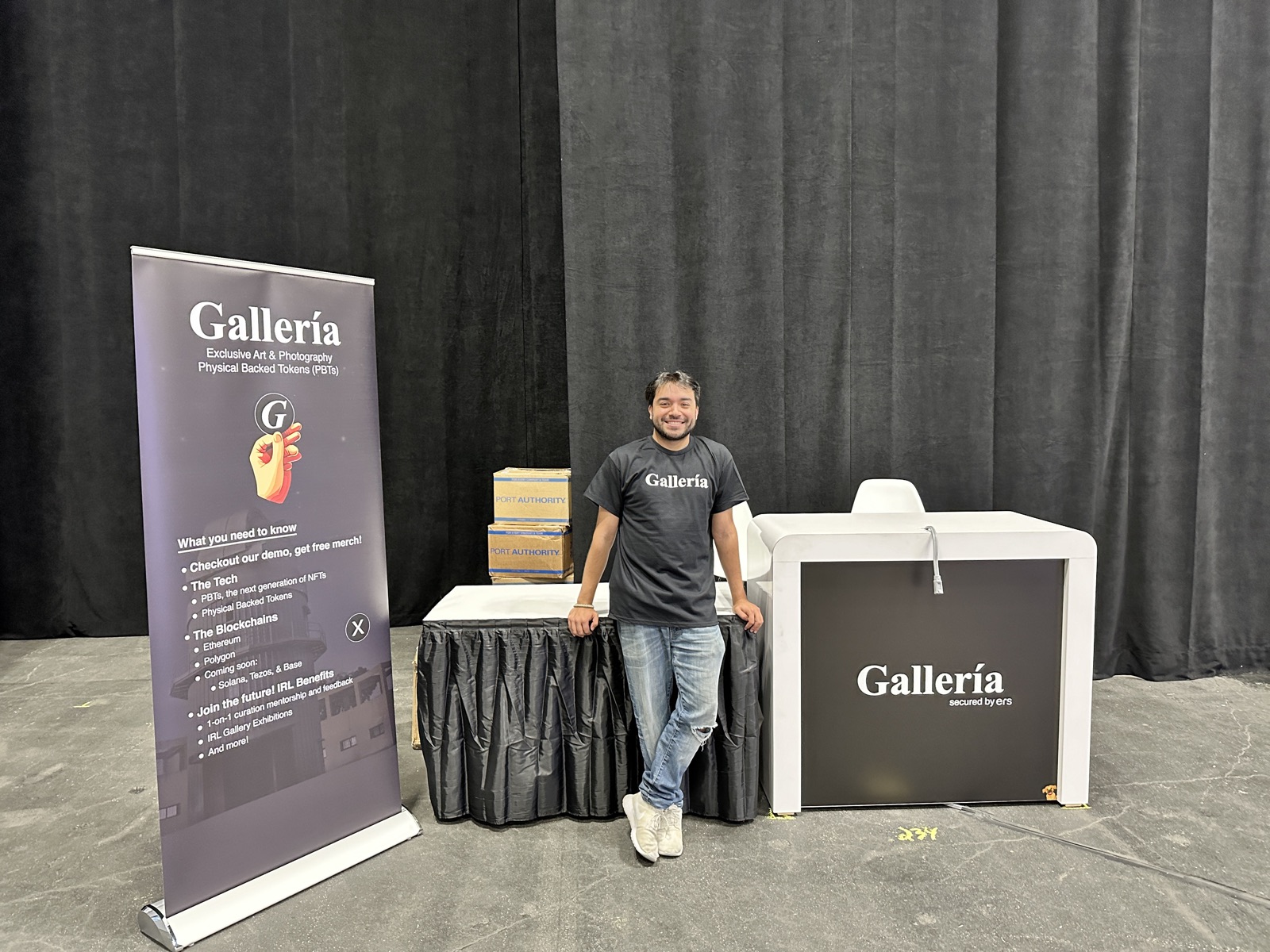
JC standing at the Gallería booth at NFT.NYC: a banner, a branded counter, and demo table
JC at the Gallería booth, NFT.NYC, New York

From the Community

A

Amber Vittoria

@amber_vittoria

So excited to have this be my first piece tethered to the blockchain using @thegalleriaio.

It’s an incredible way to keep track of how a painting moves from home to home, and establishes onchain provenance.

October 2, 2024

View on X

S

Sarah Hodsdon

@sarahndipitous

On My Desk Currently…

A lovely package of goodies from @thegalleriaio

In my pursuit to attach ‘on world physical & digital assets’ to their ‘off-world digital twins,’ the truly beautiful humans at Galleria have helped me create an interesting use-case… and delightful…

October 31, 2024

View on X

What Gallería Was

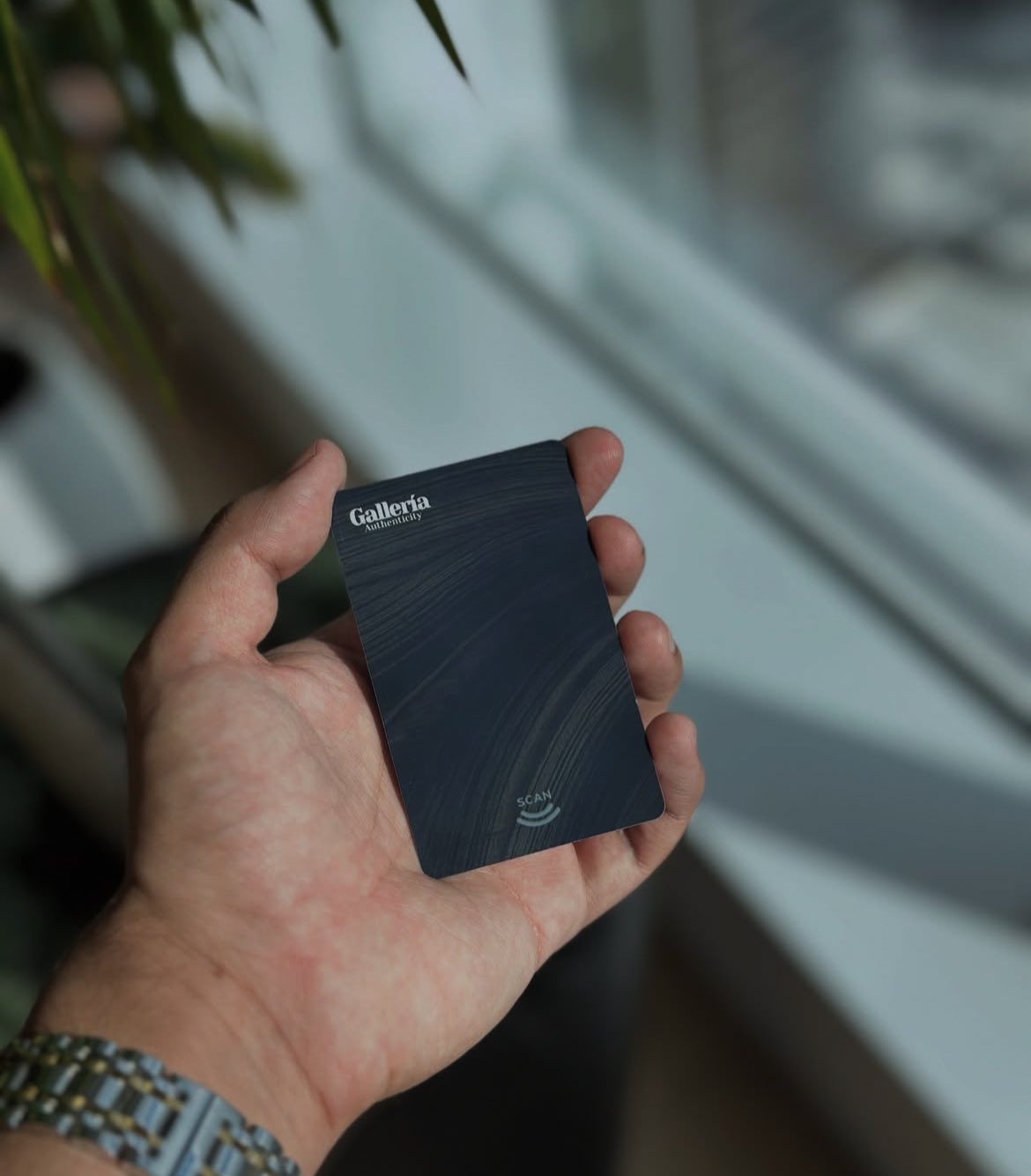
Each certificate Gallería issued lived on a public blockchain rather than in a private database, so a work's provenance could be verified by anyone, anywhere, independent of any company, including ours. It mattered most when a piece traveled far from its creator: artists shipped work internationally to buyers who could prove, with a tap of a phone, that what arrived was genuine.

A hand holding the black Gallería card: brushed texture, wordmark, and a SCAN mark with contactless arcs
The Gallería card, the certificate you could hold
From the Archive

Discover the Technology

A signature that could not be forged

1

Tag

A small NFC tag with a secure chip was affixed to each artwork. The chip held a private key that never left the hardware and could not be copied.

2

Scan

Tapping a phone to the tag asked the chip to sign a one-time challenge, a proof that this exact tag, and no forgery, was present.

3

Verify

That proof was checked against the artwork's public record on the Base, Polygon, and Ethereum blockchains: no password, no company database, just math anyone could audit. Artists and galleries never needed a crypto wallet; accounts were created and managed invisibly, and galleries ran their collections from a simple console.